With gas prices fluctuating wilder than ever, it’s only natural to re-EValuate what you’re paying to stay on the road. If you’ve stepped onto a car lot recently, you might have noticed the higher upfront sticker price on electric vehicles compared to their gas counterparts. It’s a valid concern—no one wants to take on a higher monthly payment blindly.
Looking at the sticker price alone only tells half the story. To see the true picture, you have to look at the Total Cost of Ownership (TCO). When you factor in routine maintenance, day-to-day power costs, time saved, and price predictability, the math flips. Here is why going electric outperforms internal combustion engines over the long haul.
1. Mechanical Simplification: 2,000 Parts vs. 20
A traditional internal combustion engine (ICE) vehicle relies on over 2,000 moving parts working in harsh, high-friction environments. That means oil changes, spark plug replacements, fuel filter swaps, and transmission services are an unavoidable part of your year.
By comparison, an electric vehicle’s powertrain contains roughly 20 moving parts. You can completely forget about oil changes, radiator flushes, or spark plugs. EV motors are engineered as million-mile components built for extreme longevity.
Even routine wearable items like brake pads last significantly longer in an EV. Thanks to regenerative braking—which uses the electric motor’s magnetic resistance to slow the car down—your physical brakes experience minimal friction. EV owners frequently reach 150,000+ miles on their original factory set of brake pads before needing service. Your primary routine upkeep boils down to windshield wiper fluid, cabin air filters, and tire rotations.
2. The Hidden Tax: Lost Time & Productivity
Beyond direct repair costs, traditional vehicles carry a heavy hidden tax: lost productivity. Consider the opportunity cost of routine service visits:
- Driving back and forth to service centers for routine maintenance
- Waiting in lobby areas or arranging alternative transportation
- Downtime that pulls you away from work and family
EVs eliminate these routine maintenance trips, giving you back hours of valuable time every year.
3. Cost-Per-Mile: Home Level 2 Charging vs. The Pump
Fueling a gas vehicle at $4.00 per gallon costs roughly $0.14 to $0.18 per mile. For the average driver clocking 1,000 miles per month, that’s $140 to $180 leaving your wallet every four weeks—subject to sudden global oil price surges.
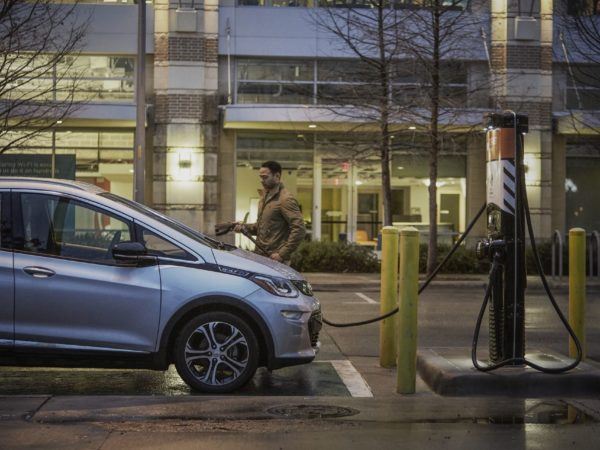
On average, driving an EV costs approximately 1/5th the cost per mile compared to a traditional gasoline vehicle. When you install a dedicated Level 2 charger at home, driving an EV on residential power drops your fuel cost down to just $0.04 to $0.06 per mile ($40 to $60 per month). Over a single year, home charging saves you roughly $1,200 at the pump alone.
4. Unlocking 1/8th Fuel Costs with Time-of-Use Rates
If your local utility provider offers Time-of-Use (TOU) rates, your savings multiply even further. By setting your vehicle’s dash schedule or smart charging app to charge during off-peak hours (typically overnight between 8:00 PM and 6:00 AM), your charging costs can drop to as little as 1/8th the cost of gas. You simply plug in when you get home at 5:00 PM, and your system automatically initiates the charge session when the lowest rate window opens.
5. Long-Term Predictability, Insurance, & Battery Health
As market tracking from Cox Automotive Insights continuously points out, long-term vehicle satisfaction directly correlates with predictable monthly operating expenses. Gas prices spike without warning, but residential power rates remain remarkably stable.
Additionally, modern EVs feature embedded telematics that promote safer driving habits, which many insurance carriers leverage to offer discounted premiums. And while battery packs experience minor degradation over time (typically around 10% every 100,000 miles), the battery easily provides hundreds of thousands of miles of reliable service.
When you offset a slightly higher auto loan payment with an $800+ annual drop in maintenance and a $1,200+ yearly drop in fuel costs, the electric vehicle quickly becomes the more affordable car to drive every single day.
If you’re ready to make the switch and want to know what it takes to set up fast Level 2 charging in your garage, we’d love to chat and walk you through your home’s setup!