Most people assume EV charging stations are standard plug-and-play appliances that nEVer need a second thought after setup. But if you want to keep your equipment running safely and efficiently, basic preventive care makes all the difference.
Residential Level 2 chargers and high-power commercial DC Fast Chargers (DCFC) operate in completely different electrical worlds. Here is what it takes to keep each running smoothly.
Level 2 Charging Stations (Home & Commercial)
Level 2 chargers operate on standard 240-volt AC power. Because they don’t house heavy conversion electronics, their physical maintenance is minimal, straightforward, and largely preventative.
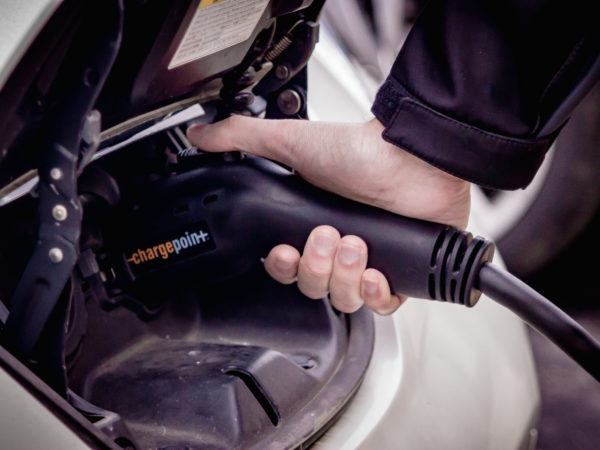
- Connector & Cable Care: Wiping down the J1772 or NACS plug weekly keeps out grit, water, and road salt. We always recommend coiling cables neatly off the ground to prevent damage and internal wiring stress.
- Visual Damage Checks: Watch for cracked casing, exposed wiring, loose faceplates, or burn marks near the outlet or hardwire connection.
- Firmware & Wi-Fi Updates: Smart Level 2 units handle software updates automatically over Wi-Fi, preventing communication glitches between your charger and the vehicle.
- Annual Electrical Inspection: Have a licensed master electrician check terminal torque, verify ground safety, and test supply voltage once a year. Loose wiring inside a 50-amp circuit can cause resistance and heat buildup long before a breaker trips.
DC Fast Chargers (DCFC / Level 3)
Commercial DCFC units convert high-voltage AC grid power into direct DC power right inside the station, outputting anywhere from 50 kW to 350+ kW. Because of these high power loads, active cooling, and heavy public utilization, DCFC stations require consistent maintenance schedules.
- Liquid Cooling System Service: High-output DCFC cables use liquid coolant loops to manage heat. Technicians check coolant levels, inspect pumps for leaks, and replace fluid per OEM schedules.
- Air Filter & Vent Replacement: DCFC internal power modules rely on forced air cooling. Intake filters get clogged with dust, pollen, and debris, so they must be cleaned or replaced quarterly to prevent thermal throttling.
- Cable Handling & Contact Wear: Heavy public use causes wear on connector pins, latches, and holster mechanisms. Cable retractor systems require regular tension adjustments to prevent cords from hitting the pavement.
- Cellular & Payment Diagnostics: Networked commercial stations rely on cellular connections and credit card readers. Firmware diagnostic sweeps, payment terminal software updates, and network checks are performed regularly to preserve station uptime.
- Preventive Torque & Surge Audits: Bi-annual or quarterly physical inspections by certified technicians ensure internal contactors, fuses, surge protection dEVices, and power distribution blocks remain tight and functional.
Maintenance Breakdown at a Glance
| Feature / Task | Level 2 Charger (AC) | DC Fast Charger (DCFC) |
| Primary Use | Single-family homes, workplaces, multi-family | Highway corridors, commercial fleets, public hubs |
| Typical Voltage | 208V – 240V AC | 400V – 1000V DC |
| Self-Care Needed | Cable coiling, basic connector cleaning | Visual safety check before plugging in |
| Pro Maintenance | Annual electrician checkup | Quarterly or bi-annual certified technician service |
| Key Failure Points | Dropped plugs, cable wear, loose terminal screws | Coolant leaks, clogged air filters, connector pin wear, card reader errors |
Have questions about keeping your home or commercial charging setup running smoothly? Give us a call at (866) 885-EVSE – we’re happy to help, and we look forward to chatting with you!