
It’s one of the most common worries we hear from drivers thinking about making the switch to an electric vehicle: What happens if my battery dies while I’m on the road?
It can be scary to think about getting stranded with a dead battery, but the reality is much less dramatic than you might expect. Range anxiety makes this feel like a huge threat, but running out of charge in an EV is rare, and when it does happen, getting back on the road is straightforward.
What Actually Happens When Your Battery Reaches 0%?
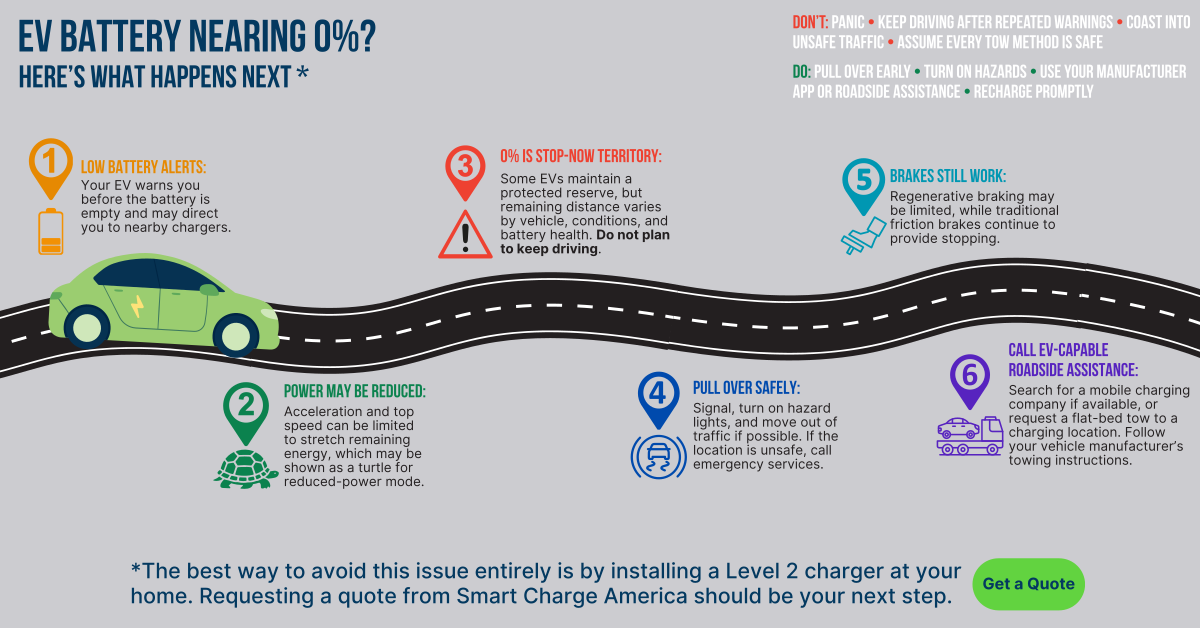
Your EV won’t just stop dead in the middle of a lane without warning. Long before your battery completely empties, your vehicle will actively work to get you safely to a charger.
- Early Warnings: When your battery drops below 15-20%, your dashboard display will change to alert you, and your navigation system will automatically show nearby charging stations.
- Turtle Mode: If you pass 0%, most electric cars enter a low-power state often called “Turtle Mode.” The car limits its speed and turns off high-energy features like climate control to preserve power, giving you a few extra miles to safely pull off the road.
- The Final Stop: Once the main high-voltage battery shuts off completely, you can safely steer to the shoulder. Your 12-volt battery keeps hazard lights, power steering, and door locks working so you remain safe.
Emergency Options in a Pinch
If you do end up stranded on the shoulder, you have clear, safe options to get moving again.
- EV-Specialized Roadside Assistance Organizations like AAA and major automakers (including Ford and Tesla) offer roadside assistance tailored specifically for electric vehicles. If you’re out of power, they will dispatch a flatbed tow truck to take your car to the nearest public charger or your home.
- Specialized Towing Protocols If you need a tow, the most important rule is that EVs must be transported on a flatbed truck. Because electric motors generate electricity when the wheels turn, traditional wheel-lift towing can damage the drivetrain. Flatbed towing keeps all four wheels off the ground, protecting your vehicle’s mechanical components.
- Mobile Emergency Chargers Mobile EV charging services are expanding across the country. Roadside providers in many major metro areas carry portable Level 2 or Level 3 DC fast-charging units that can give your battery a quick 10-to-15-minute boost—just enough mileage to comfortably drive to the nearest fast charger.
The Best Defense Is a Solid Home Base
According to industry data from InsideEVs, the vast majority of EV drivers run out of charge not on long road trips, but during daily routines when they forget to plug in overnight.
Having a dedicated Level 2 charger installed at home eliminates this risk entirely. Plugging in overnight gives you a “full tank” every morning, turning a potential emergency into something you never have to think about.
Our team of master electricians specializes exclusively in setting up fast, reliable home charging stations. We’ll make sure your system is installed right, so you can leave range anxiety behind for good.